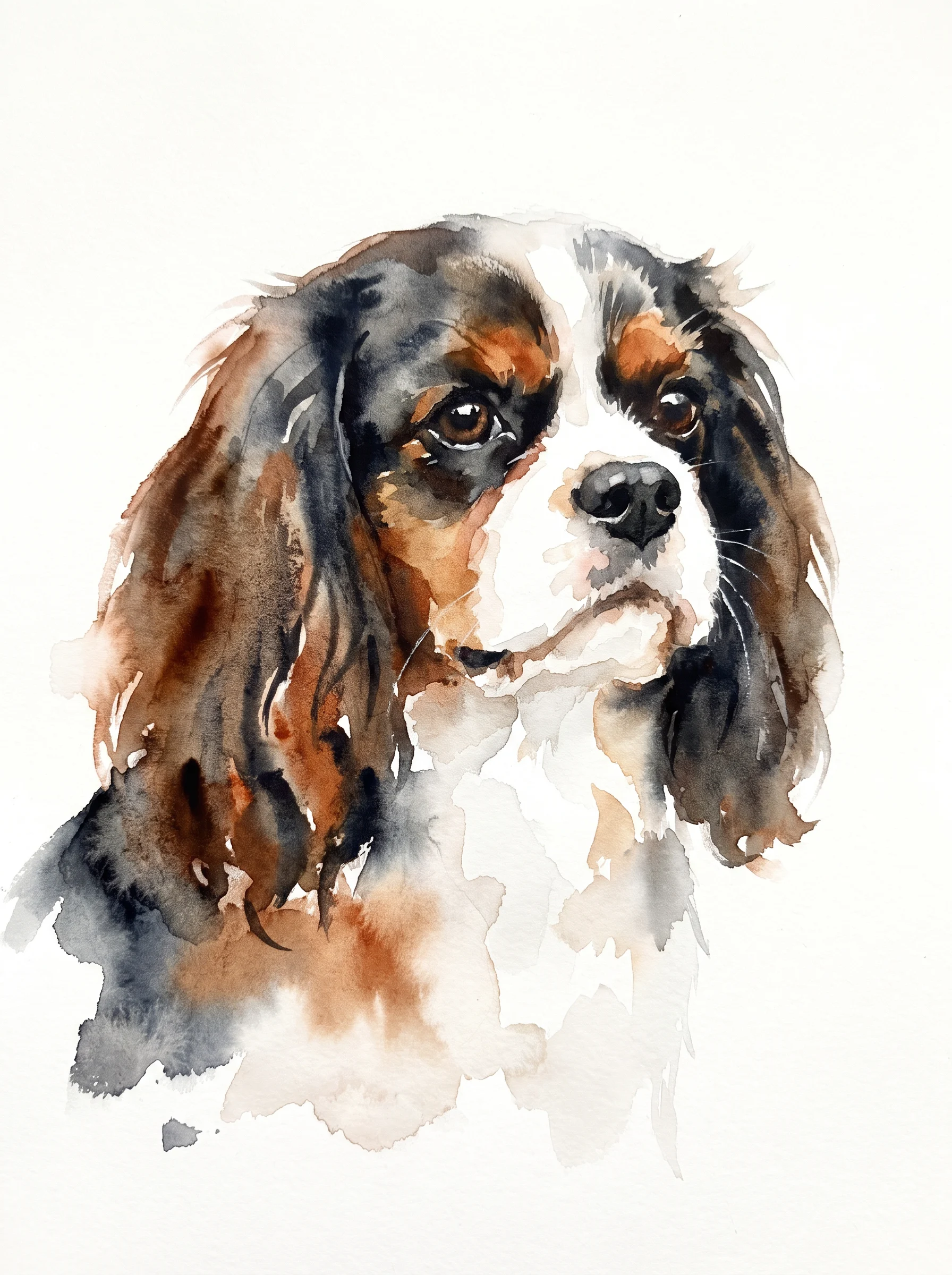
The Watercolour
From $29.99 · Within 24 hours
Personalized changes included until you approve.
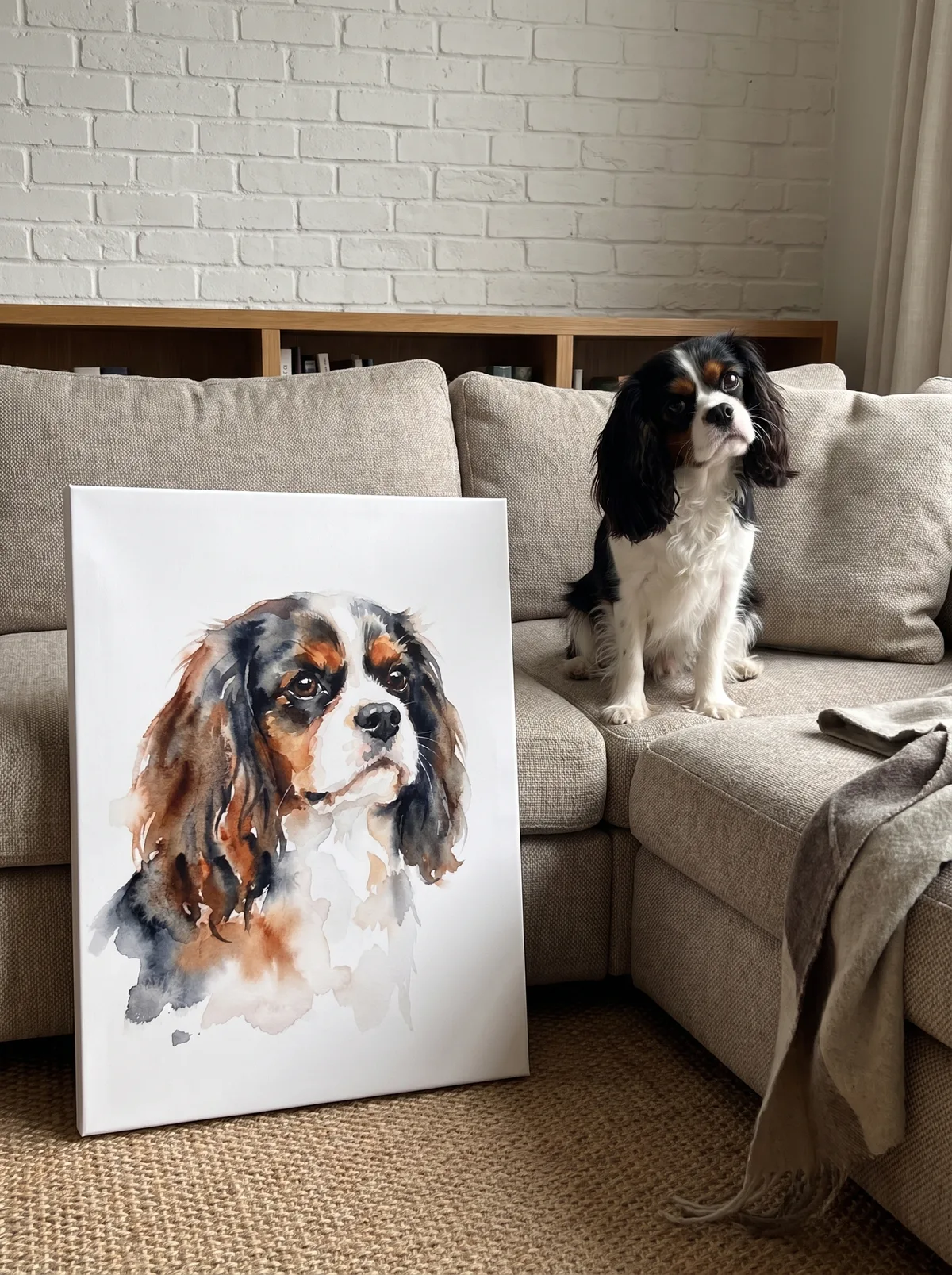
The Watercolour
Loose washes on white paper, edges left soft and unfinished. The gentlest thing we make.
- Poster Print
- From $39.99
- Premium Canvas
- From $69.99
- Framed Poster
- From $79.99
- Luxury Framed
- From $99.99
- Heirloom Gallery Canvas
- From $179.99
Available For
About This Style
Most pet portraits shout. This one does not, and that is the entire point of it.
A watercolour works by leaving things out. The paper stays white where the light falls, the edges of the body are allowed to dissolve rather than being drawn, and the colour is left to pool and settle the way real pigment does when it dries. What you get is a picture that suggests your pet rather than documenting it, and suggestion is a surprisingly powerful thing when the subject is an animal you already know by heart. You fill in the rest without noticing.
It is the style people choose for a nursery, a hallway, a bedroom, anywhere a loud picture would be wrong. It is also the one that works best in a house that is already full of things, because it adds calm instead of competing.
The palette comes from your pet. We pull three or four colours out of the actual coat and use only those, so a black cat becomes a study in blue grey and warm shadow rather than a black shape on white. Markings stay exactly where they are; we are loosening the treatment, never the likeness.
It suits every animal, but it is especially good for pets with soft or long coats, where the bleed of the paint does something a photograph cannot.
Frequently Asked Questions
Will my pet still be recognisable if the edges are soft?
Yes. The looseness is in the edges and the background, never in the face. Eyes, nose and markings are painted with full attention and the rest is allowed to fall away, which is exactly how watercolour portraits of people have worked for two hundred years.
Does this work for a black or very dark pet?
It works particularly well. Instead of a dark shape we build the coat out of blues, warm greys and deep browns pulled from the real animal, so a black pet gains depth on the page rather than losing it.
Is there a white border around the painting?
There is white paper inside the artwork, which is part of the style, but the printed canvas or print is full bleed with no mount and no frame line. The image runs right to the edge.