Monochrome
From $29.99 · Within 24 hours
Personalized changes included until you approve.
Monochrome
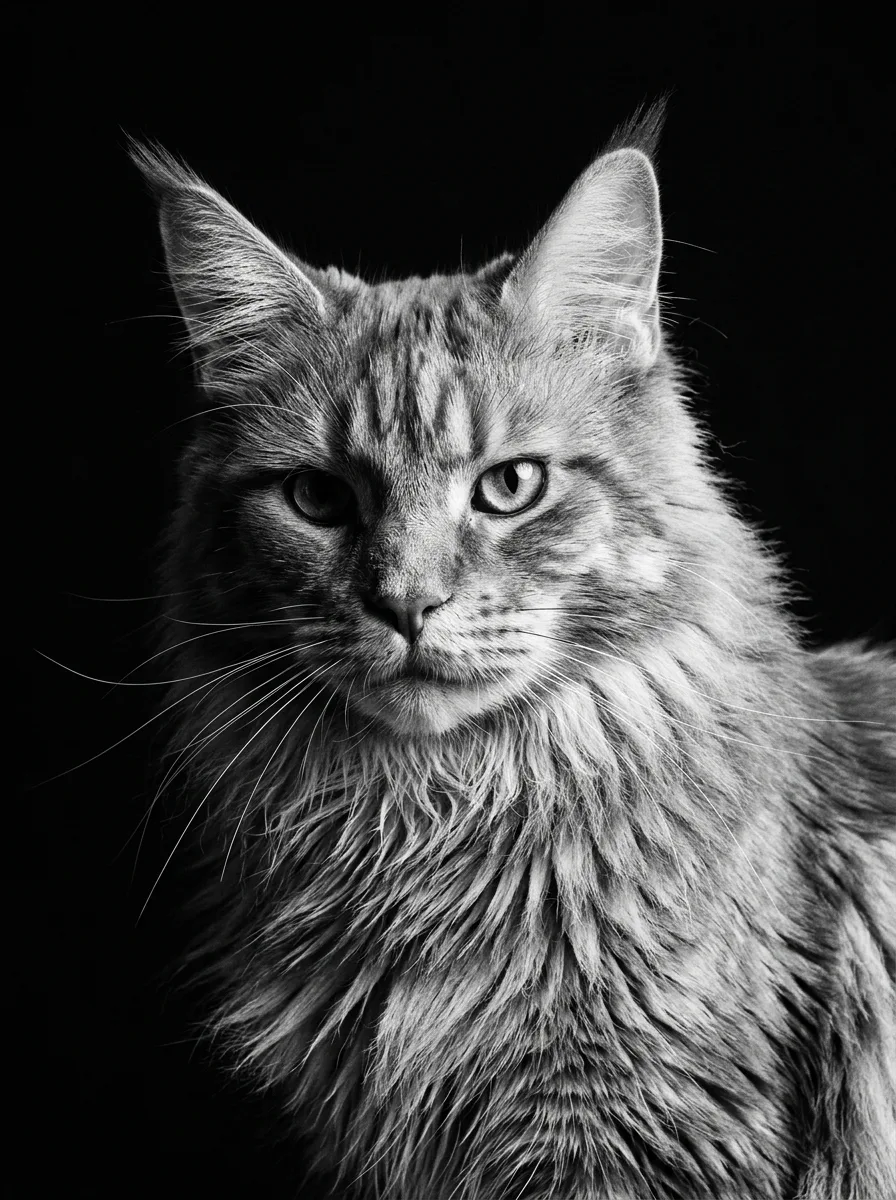
Black and white, pure and severe. One hard light, a bottomless black background, and nothing at all competing for attention.
- Poster Print
- From $39.99
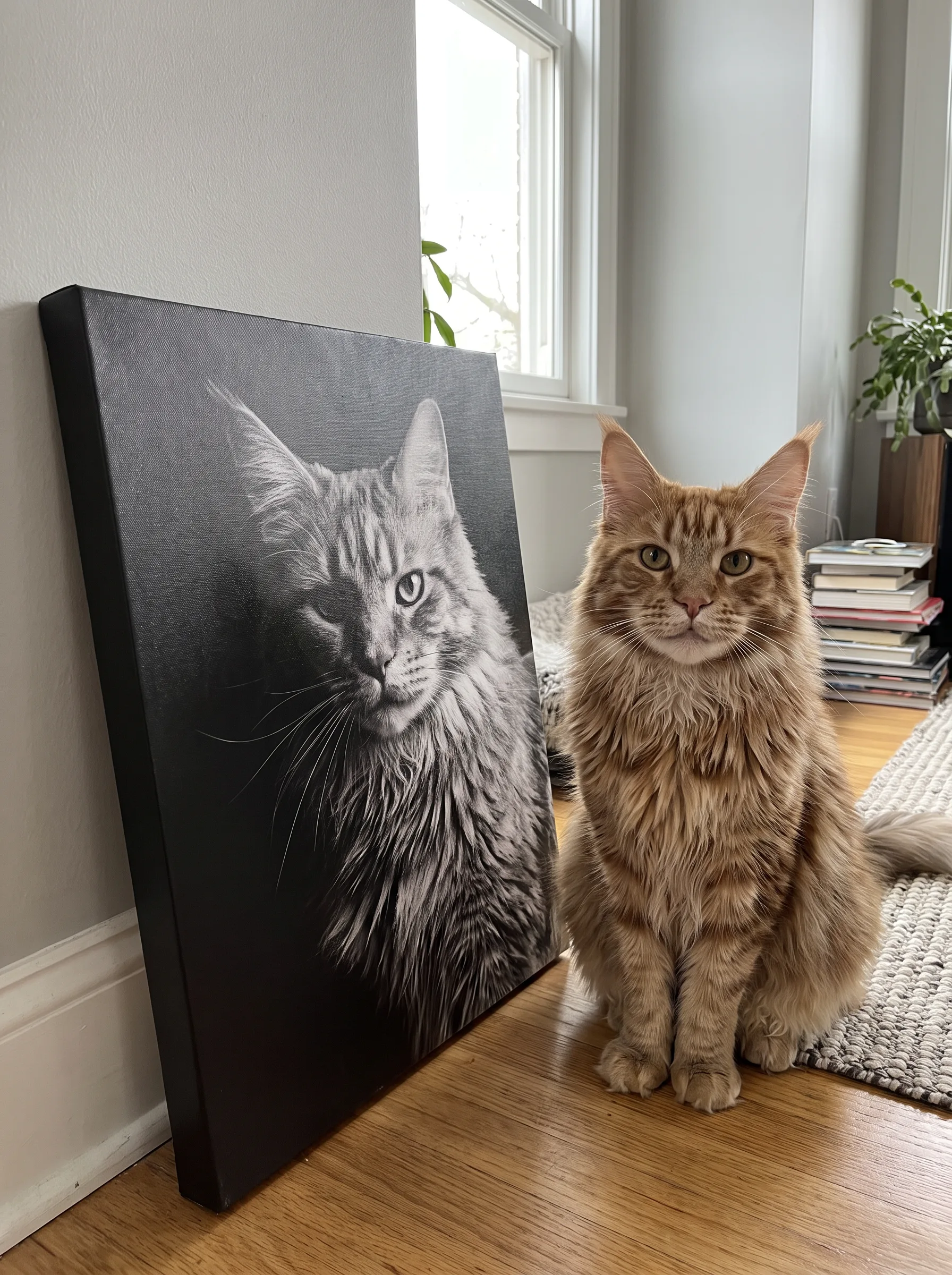
- Premium Canvas
- From $69.99
- Framed Poster
- From $79.99
- Luxury Framed
- From $99.99
- Heirloom Gallery Canvas
- From $179.99
Available For
About This Style
Monochrome removes colour, background and context, and what is left is structure: the line of a jaw, the direction of a coat, the exact geometry of an ear.
A single hard key light rakes in from the upper right so that whiskers and the fine hair at the edge of the face light up as bright silver filaments while the other side of the head falls away into true black. The backdrop is not dark grey. It is empty. Nothing behind the animal, no wall, no furniture, no soft blur suggesting a room, which is why the subject reads as sculpture rather than as a pet who happened to be photographed.
Long coated and heavily whiskered animals get the most out of it, because the light has more to catch. Black animals, which are notoriously the hardest to photograph and which most owners have never seen a good picture of, come out extraordinarily well here: on a black field, a black coat is defined by its highlights instead of disappearing into shadow.
This is the least sentimental style we make and the one that looks most like it belongs in a gallery. People hang it in hallways, offices and studies, where a crown would be too much.
Frequently Asked Questions
My pet is completely black. Will they just disappear?
The opposite. This style is the one we would steer you toward. Because the background is pure black rather than grey, a black coat is described entirely by the highlights raking across it, so the shape, the direction of the fur and the eyes read clearly. It is the treatment professional photographers use for exactly this problem.
Can I get this style in colour instead?
Monochrome is black and white by design; the whole composition is built around contrast rather than colour. If you want the same stripped back studio treatment with colour retained, order The Modern Portrait instead, which uses the same lighting approach on a warm grey backdrop.
Where does this style hang best?
Hallways, offices, studies and stairwells, anywhere a full colour portrait would fight with the room. Because there is no colour in it, it sits against any wall and beside any other picture without clashing, which is why people who already own framed photography tend to pick this one.